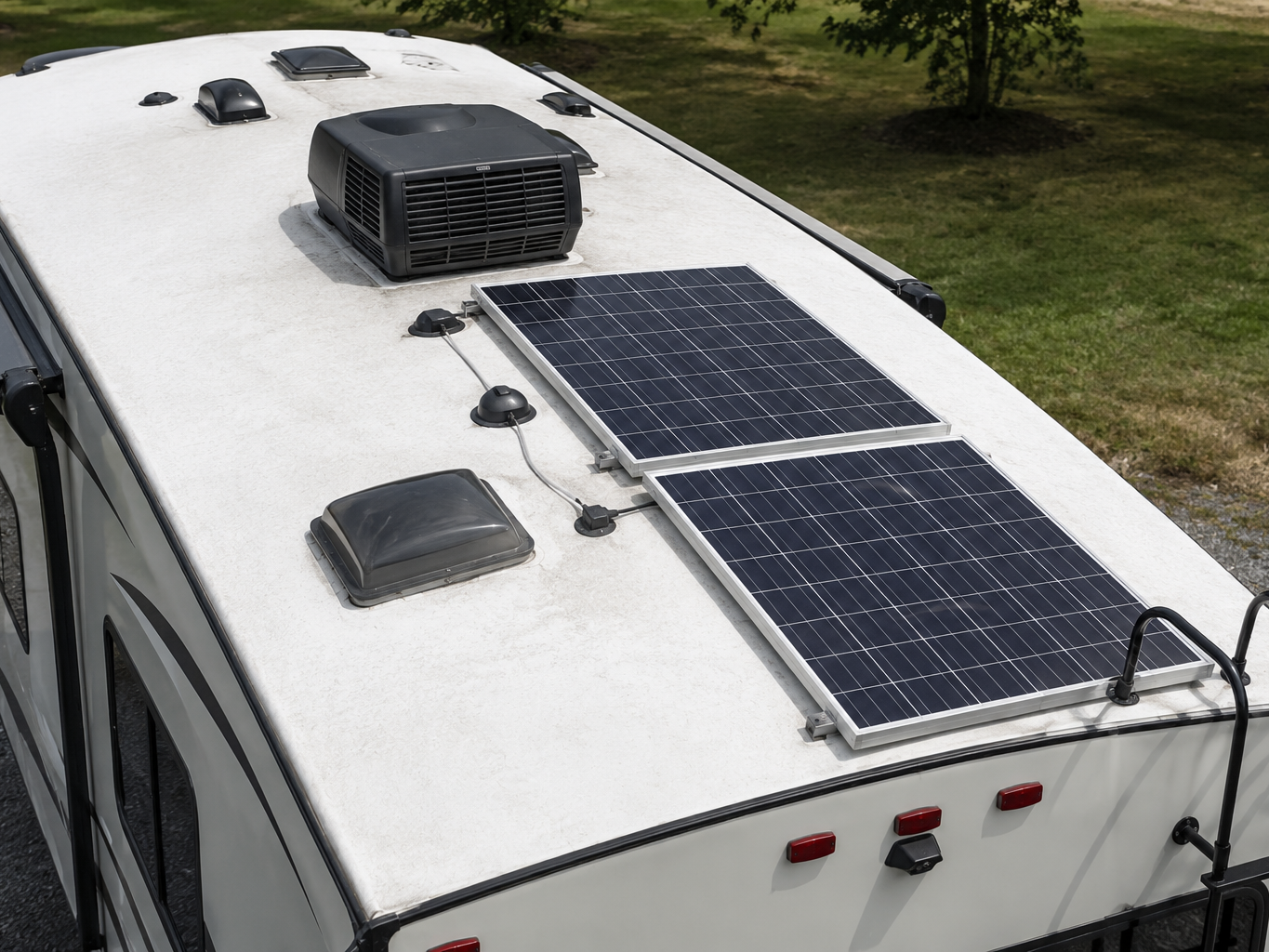
If you’ve shopped for an RV recently, you’ve probably noticed that more manufacturers are offering solar panels as either standard equipment or an available option. If your RV didn’t come with solar, you may be wondering if it’s something worth adding.
The answer isn’t the same for everyone.
Whether solar is a smart investment depends entirely on how you use your RV. For some owners, it’s a valuable upgrade that adds convenience and flexibility. For others, their existing electrical system already meets their needs.
Before making the decision, it’s helpful to understand exactly what RV solar can and can’t, do.
What Do RV Solar Panels Actually Do?
One of the biggest misconceptions about RV solar is that it powers everything in your camper.
In reality, most RV solar systems are designed to keep your batteries charged. Those batteries then supply power to your RV’s 12-volt systems, which may include:
- Interior lighting
- Water pump
- USB charging ports
- Roof vent fans
- Furnace blower
- Refrigerator control board on many RVs
Solar works best by replacing the energy your batteries use throughout the day, helping extend the amount of time you can camp without plugging into shore power.
What Solar Won’t Do
Many first-time RV owners are surprised to learn that a typical factory-installed solar system isn’t designed to run high-demand appliances.
Items such as your air conditioner, microwave, electric water heater, space heaters, and most household appliances require significantly more power than a basic solar setup can provide.
Running those appliances on solar is possible, but it requires a much larger battery bank, a properly sized inverter, and additional solar capacity.
The Pros of RV Solar
Solar offers several advantages, especially for RV owners who enjoy flexibility while traveling.
Some of the biggest benefits include:
- Keeps your batteries charged while camping.
- Reduces the need to run a generator.
- Helps maintain battery charge during storage.
- Provides quiet, renewable power.
- Gives you more freedom to camp without electrical hookups.
- Requires very little day-to-day maintenance.
For RV owners who enjoy boondocking, overnight stops, or camping in remote areas, solar can make traveling much more convenient.
The Cons of RV Solar
Solar isn’t the perfect solution for every RV owner.
Some things to consider include:
- Solar production depends on available sunlight.
- Shade, cloudy weather, and shorter winter days reduce charging ability.
- Factory-installed systems are often designed for light electrical use.
- Solar doesn’t eliminate the need for healthy batteries.
- It may not provide much benefit if you spend nearly all your time connected to shore power.
Like any RV upgrade, solar works best when it’s matched to your camping style.
Is Solar Right for You?
Solar may be an excellent choice if you:
- Frequently camp without hookups.
- Travel long distances and make overnight stops.
- Store your RV where electricity isn’t available.
- Want greater flexibility while traveling.
- Prefer quieter camping without relying heavily on a generator.
If you primarily stay at RV parks with full hookups, you may find that your existing electrical system already provides everything you need.
Don’t Overlook Your Batteries
One of the biggest misconceptions we see is the belief that adding solar will solve battery problems.
It won’t.
Solar panels can only recharge the batteries they’re connected to. If your batteries are aging, damaged, or your charging system isn’t functioning properly, adding solar won’t fix the underlying issue.
Before investing in any solar upgrade, it’s a good idea to have your batteries, converter, and charging system inspected to make sure everything is operating correctly. A healthy electrical system is the foundation of reliable solar performance.
The Bottom Line
RV solar panels can be an excellent upgrade, but they aren’t a necessity for every RV owner.
The best upgrades are the ones that fit the way you actually use your RV. If you enjoy camping off the grid or want more flexibility while traveling, solar may be one of the most valuable additions you can make. If you’re almost always connected to shore power, you may find that your current setup already meets your needs.
Understanding how your RV’s electrical system works before making any upgrades can help you avoid unnecessary expenses and ensure you’re getting the performance you expect.
If you’re considering adding solar but aren’t sure whether it’s the right fit for your RV, RV Mobile Medics can inspect your electrical system, evaluate your batteries and charging components, and help you understand your options before you make a decision
Leave a Reply