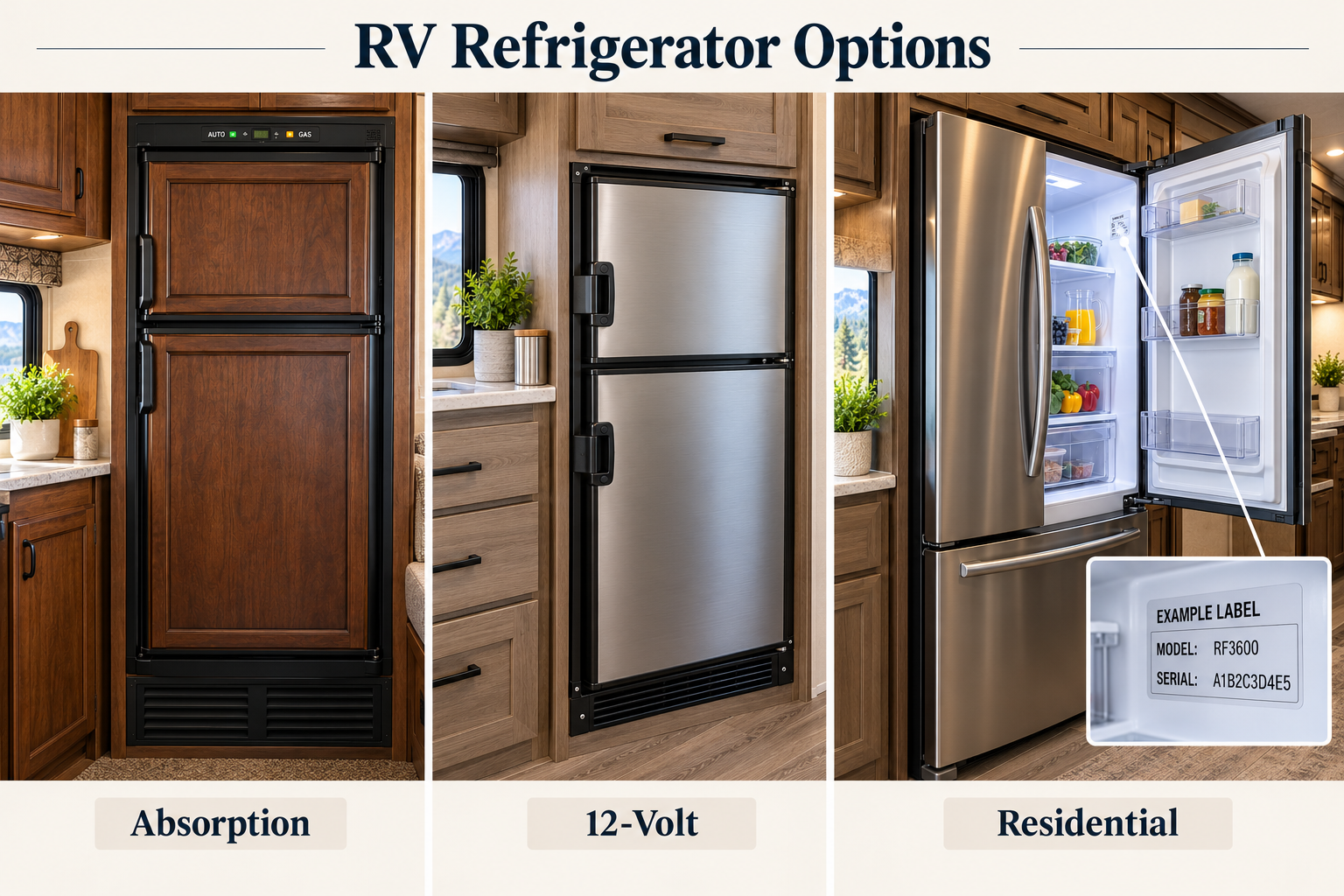
RV refrigerators can look similar on the outside while operating very differently behind the scenes. Knowing which type you have helps you understand its power requirements, what affects its cooling and what to consider when repairs or replacement become necessary.
Three common options are absorption RV refrigerators, 12-volt compressor RV refrigerators and residential refrigerators. The right choice depends on how you use your RV, where you camp and how you supply power.
Absorption RV Refrigerators
Absorption refrigerators are the traditional RV refrigerators that commonly operate on propane or 120-volt electricity. Some models also offer a 12-volt cooling mode. Many need 12-volt power for their controls regardless of which energy source provides the cooling.
It may sound backward, but these refrigerators use heat to remove heat from inside the refrigerator. A propane flame or electric heating element drives a sealed cooling system containing ammonia, water and hydrogen. That process cools the food compartment without a compressor.
Having more than one energy option can be useful if you sometimes camp without electrical hookups. If you stay connected to shore power, you can generally use the refrigerator’s electric setting.
Why Leveling Matters
The cooling system relies partly on gravity to keep fluids moving through its tubing. When the RV is parked too far out of level, that circulation can be disrupted, reducing cooling and potentially damaging the cooling unit.
Follow your refrigerator manufacturer’s leveling requirements. If your RV stays parked for extended periods, check again if it settles or its position changes.
Why Outside Ventilation Matters
The refrigerator needs to release heat through the vents behind it. Air enters through a lower exterior vent, passes over the cooling equipment, and carries heat out through an upper sidewall or roof vent, depending on the installation.
Blocked vents, debris or installation problems can trap that heat. When heat cannot escape, cooling suffers. Exterior refrigerator vents need to remain clear, even when the RV stays parked year-round.
How North Texas Heat Affects Cooling
During stretches of 100-degree weather, an absorption refrigerator can have more difficulty keeping up. It needs to release heat into air that is already extremely hot. Direct afternoon sun on the refrigerator side of the RV can add to the challenge.
Performance varies by model and installation. Proper ventilation becomes especially important in hot weather, and some installations benefit from a manufacturer-approved ventilation fan. A technician can check whether airflow and existing fans are working as intended.
Why It Takes Longer to Cool
An absorption refrigerator generally responds more slowly than a compressor refrigerator. Cooling from room temperature takes time, and so does recovering after groceries are loaded or the door is repeatedly opened.
Start it well before loading food, following your model’s recommended cooling time. Load already chilled groceries, leave room for air to circulate and minimize unnecessary door openings.
If cooling becomes inconsistent, have the refrigerator evaluated rather than assuming hot weather explains the entire problem.
12-Volt Compressor RV Refrigerators
A 12-volt compressor refrigerator uses a compressor to circulate refrigerant and remove heat from inside the refrigerator. It works on the same basic cooling principle as a household refrigerator, but uses the RV’s 12-volt electrical system.
It does not use propane. This makes understanding the RV’s electrical supply especially important.
How It Gets Power While Plugged In
While the RV is connected to shore power, the converter normally changes 120-volt electricity into 12-volt electricity to supply the RV’s 12-volt system and charge the battery.
The refrigerator still needs adequate voltage at its electrical connections. A converter problem, damaged wiring, or a poor connection can affect operation even when the RV is plugged into a campground pedestal. Being connected to shore power does not rule out a 12-volt power problem.
That is one reason a refrigerator that stops cooling needs a diagnosis before replacement is considered.
What Happens During Travel or a Power Outage?
A 12-volt compressor refrigerator can operate from the RV’s battery system when shore power is unavailable.
How long it runs depends on battery capacity and condition, refrigerator demand, other electrical loads and available charging. There is no single battery runtime that applies to every RV.
For weekend travelers, that means planning for the drive and any stops. For stationary owners, it means understanding what backup power is available during a campground outage.
Solar can help recharge batteries, but having panels does not guarantee enough power to run the refrigerator indefinitely.
How Heat and Ventilation Affect It
A compressor refrigerator also needs to release the heat it removes from the food compartment. Its installation must provide the clearances and airflow specified by the manufacturer.
Do not assume it needs the same exterior vent arrangement as an absorption refrigerator. Requirements depend on the model.
High surrounding temperatures and restricted ventilation can make a compressor refrigerator work harder or affect cooling. Keeping the RV’s interior reasonably cool and maintaining the required airflow helps support normal operation.
Everyday Use and Cooling Performance
Compressor refrigerators generally cool and recover more quickly than absorption models, but they still need time to reach operating temperature before groceries are loaded.
Keep interior air vents clear and avoid packing food tightly against them. Check that doors close completely and seals are clean.
If the refrigerator repeatedly shuts off, displays an error, or stops maintaining temperature, note the symptoms. Checking the power supply is part of identifying whether the problem is electrical or within the refrigerator itself.
Residential Refrigerators
A residential refrigerator is the household-style refrigerator you would find in a home kitchen. It uses an electrically powered compressor to circulate refrigerant, removing heat from the food compartments and releasing it into the surrounding air.
Depending on the model, features such as adjustable shelves, freezer drawers, and automatic defrost can make everyday grocery storage convenient.
A residential refrigerator can suit stationary RV owners and travelers who regularly camp with electrical hookups.
How It Gets Power
A residential refrigerator plugs into a 120-volt electrical outlet. When the RV is connected to shore power, that outlet supplies the electricity it needs.
It does not run on propane or connect directly to a 12-volt battery.
Some RVs have an inverter that converts battery power into 120-volt electricity. If the refrigerator’s outlet is connected to that inverter, it can continue operating without shore power, provided the inverter and batteries can support it. Having an RV battery alone does not provide that capability.
Know how your particular RV is wired before relying on battery backup during travel or a power outage.
Using One for Weekend Camping
If your RV is plugged in at home, let the refrigerator cool completely and load it with already chilled groceries before departure. Preparing it the day before can give it time to cool according to the manufacturer’s instructions.
Once you reach a campsite with electrical hookups, shore power supplies the refrigerator again.
The drive between hookups needs its own plan. If no inverter or other suitable source supplies the refrigerator’s outlet, it stops actively cooling when you unplug. Consider travel time, hot weather and possible delays when planning how to keep food cold.
Boondocking requires an ongoing electrical supply through an adequately designed battery and inverter system, generator use, or a combination of sources.
How Heat and Ventilation Affect It
A residential refrigerator needs room to release heat. Installing it tightly inside an RV cabinet without the required clearances can restrict airflow and affect performance.
Surrounding temperature matters, too. An RV sitting closed up in summer without air conditioning can become much hotter than a home kitchen. Extreme temperatures can affect refrigerator operation.
Check the model’s specified operating temperatures and installation clearances. These requirements vary by refrigerator.
When replacing an absorption refrigerator, the existing exterior vents and cabinet need to be evaluated as part of the new installation.
Everyday Care
Leave space around interior air vents and make sure groceries do not prevent the doors from closing completely.
Keep door seals clean and follow the refrigerator’s maintenance instructions. On models with condenser coils that require cleaning, accumulated dust and pet hair can interfere with heat removal.
A refrigerator thermometer helps you monitor actual temperature rather than relying only on the control setting.
What to Consider Before Replacing One
Measure the cabinet opening, the replacement refrigerator, and the RV’s entry door opening to make sure the refrigerator will fit through it. Also check interior passageways, door swing, and drawer clearance.
If it will not fit through the entry door, discuss removal and installation options before purchasing it. A replacement may require more work than simply sliding one refrigerator out and another in.
Electrical requirements, ventilation, weight and secure mounting also need attention. A refrigerator that fits the cabinet still needs a suitable installation.
Which Refrigerator Fits How You Camp?
Consider where you spend most of your time and how you obtain power.
- Usually connected to shore power: All three types may be options, depending on the RV’s installation and your storage needs.
- Traveling between campgrounds: Understand how the refrigerator receives power during the drive.
- Camping without hookups: Consider energy sources, battery capacity, charging and how long you expect to stay.
- Living in the RV every day: Think about grocery storage, dependable cooling, maintenance and plans for power interruptions.
The best choice is the one that fits your routine and your RV’s systems.
When Cooling Problems Start, Diagnose First
A refrigerator that stops cooling does not automatically need replacement. The problem may involve its power supply, ventilation, installation or an appliance component.
When scheduling service, have the refrigerator’s make, model, serial number, and any error codes available. Look for the manufacturer’s information label inside the refrigerator, often on a sidewall or near the door opening. Take a clear picture of that label and send it to the technician. It helps identify the exact refrigerator, look up specifications and parts, and prepare for the service visit. If replacement is being considered, that information also helps research sizing and installation requirements, although the cabinet and entry door openings still need to be measured. Explain what changed, when it started, and which power source was being used when the problem occurred.
RV Mobile Medics Repair & Service provides mobile RV refrigerator diagnostics in Fort Worth and the surrounding areas. Having the problem evaluated at your location helps you understand your repair or replacement options while your RV stays parked.
Leave a Reply