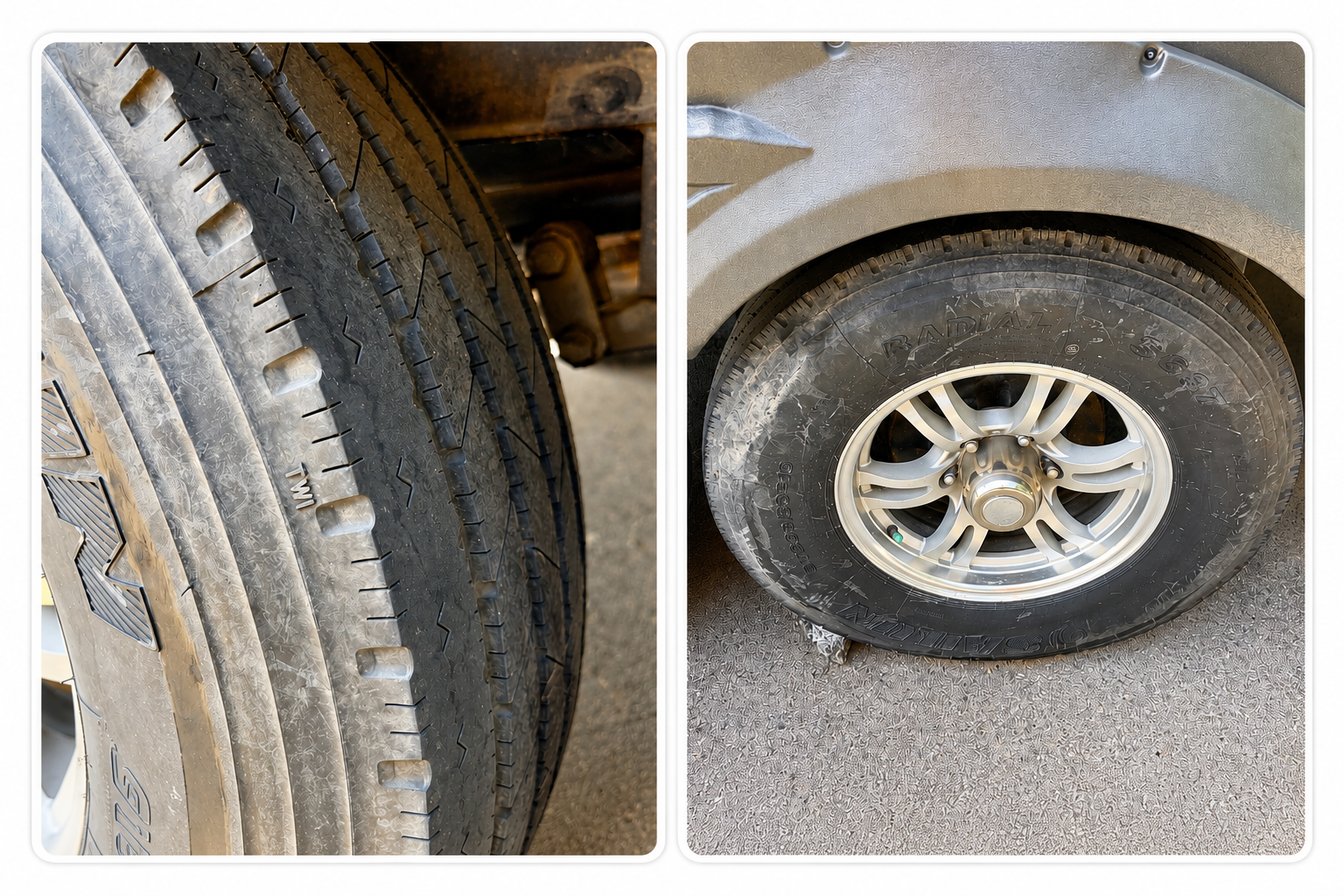
A common question RV owners ask is, “When should I replace my RV tires?”
The answer isn’t always simple.
Some tires wear out because of miles on the road, while others need to be replaced because of age, cracking or damage. Even a tire with plenty of tread can become unsafe over time.
Knowing what to look for can help you avoid unexpected problems and protect your RV from costly damage.
Tread Isn’t the Only Thing That Matters
Many people assume that if the tread looks good, the tires are still safe.
With RVs, that’s not always true.
Unlike the tires on your everyday vehicle, RV tires often spend weeks or even months sitting in one place. During that time they’re exposed to sunlight, heat, moisture and the weight of the RV. Over time, the rubber begins to deteriorate, even if the tire hasn’t been driven very much.
Signs It May Be Time to Replace Your RV Tires
It’s a good idea to inspect your tires regularly. Look for:
- Cracks in the sidewall
- Uneven tread wear
- Bulges or bubbles
- Cuts or punctures
- Exposed cords
- Tires that won’t hold proper air pressure
- Excessive vibration while towing or driving
If you notice any of these warning signs, it’s time to replace the tires before your next trip.
How Old Are Your Tires?
Age is one of the biggest factors in determining whether a tire should be replaced.
Even tires that appear to be in good condition can become less reliable as they get older. If you don’t know the age of your tires, check the DOT date code stamped on the sidewall or ask a qualified RV technician to inspect them.
Summer Heat Can Make Problems Worse
Texas summers are especially hard on RV tires.
High temperatures create additional stress on the rubber, and a tire that is already worn, damaged or underinflated is much more likely to fail in extreme heat.
That’s why checking your tire pressure before every trip is so important.
Always check your tire pressure when the tires are cold and inflate them according to the manufacturer’s recommendations for your RV.
A Blowout Can Damage More Than the Tire
Not every blowout can be prevented. Road debris, potholes and other hazards can damage even a well-maintained tire.
However, worn or aging tires are more likely to experience problems.
When a tire fails, the damage often extends far beyond the tire itself. We’ve seen blowouts tear apart wheel wells, underbellies, skirting, plumbing, wiring and other components, turning what could have been a simple tire replacement into a much more expensive repair.
Don’t Forget the Rest of Your Running Gear
Your tires work together with the rest of your RV’s running gear.
Regular inspections should also include:
- Wheel bearings
- Brakes
- Suspension components
- Valve stems
- Lug nut torque
Keeping everything in good condition helps your RV travel more safely and can help extend the life of your tires.
The Bottom Line
There’s no single mileage or date that tells every RV owner when it’s time to replace their tires.
The best approach is to inspect them regularly, maintain proper tire pressure, and pay attention to signs of aging or damage. If you’re unsure whether your tires are still road ready, it’s always better to have them inspected before heading out.
RV Mobile Medics can inspect your RV tires and let you know whether they’re safe for the road or if it’s time to replace them. You’ll get an honest assessment so you can make an informed decision before your next trip.
Leave a Reply